Central Asia is strengthening its position in Eurasian economic cooperation
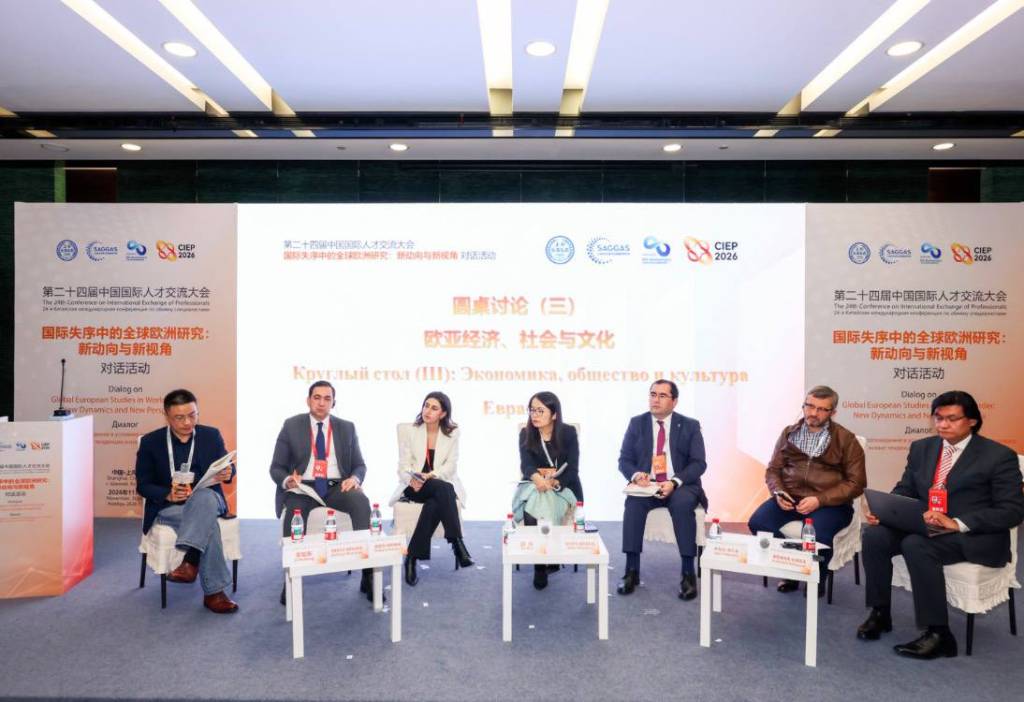
On 12-13 November 2026, Shanghai hosted the international forum “Global European Studies in World Disorder – New Dynamics and New Perspectives”, organized by Shanghai International Studies University and the Shanghai Academy of Global Governance and Area Studies.
Discussions focused on transforming international economic relations, developing Eurasian connectivity, industrial cooperation, and green and digital modernization.
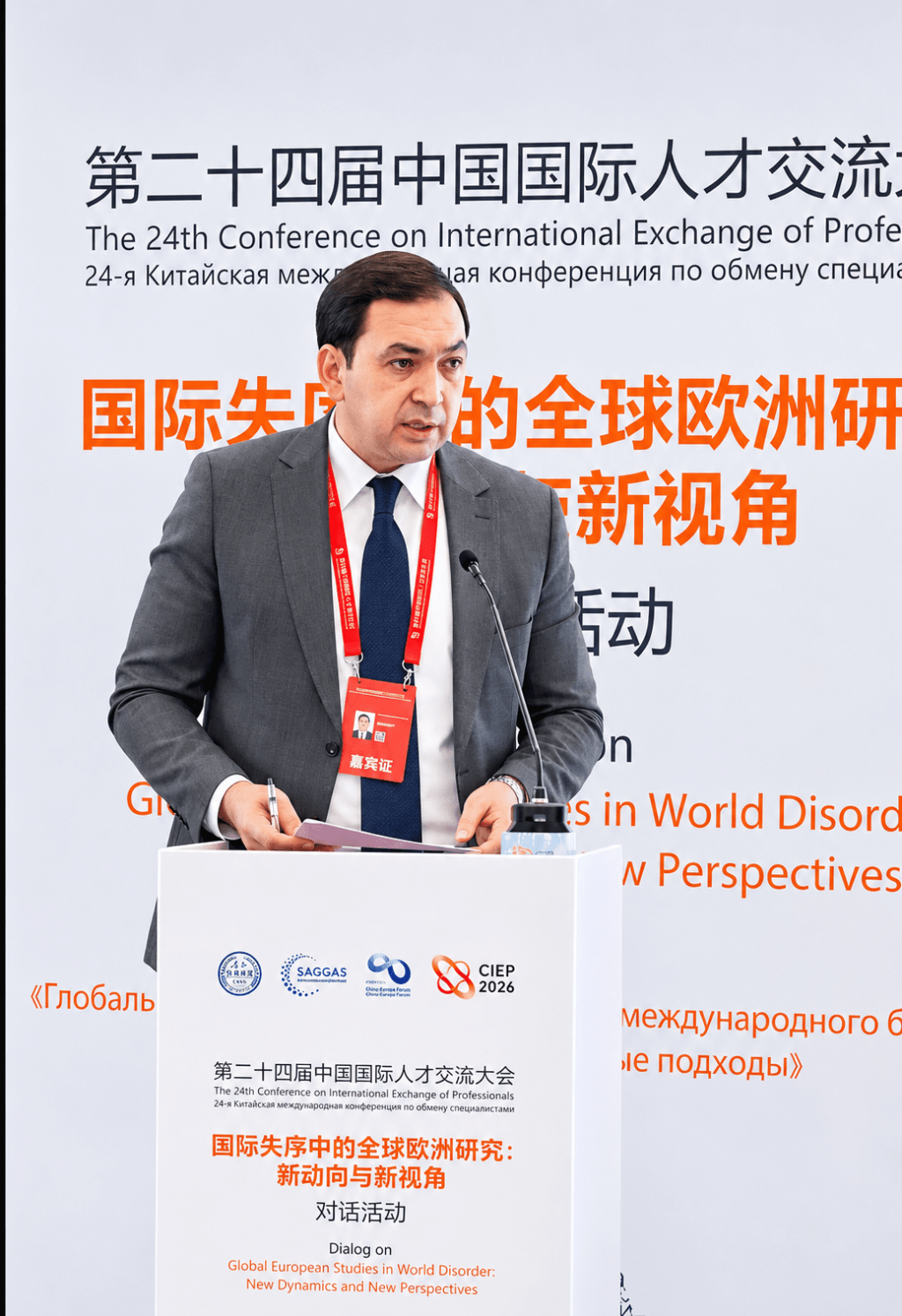
Bakhtiyor Mustafayev, Deputy Director of the Institute for Strategic and Regional Studies under the President of the Republic of Uzbekistan (ISRS), delivered a presentation at the thematic session “Economy, Society and Culture of Eurasia”. He emphasized that, amid global change, Central Asia is gradually evolving from a transit region into a participant in Eurasian production and logistics chains in its own right.
In his view, the new momentum in regional cooperation is creating favorable conditions for closer engagement with China and other Eurasian partners. He stressed the importance of moving beyond expanding trade toward joint investment, production localization, and technology exchange.
In this context, Mr. Mustafayev identified priority areas for economic cooperation.
First, strengthening transport and logistics connectivity. The construction of the China – Kyrgyzstan – Uzbekistan railway is particularly important, as it could improve connectivity between Eurasian markets and create further opportunities for industrial cooperation. Customs procedures also need improvement, along with logistics digitalization.
Second, developing regional value chains. According to the ISRS representative, Central Asian countries need to shift from a raw-material-based economic model to joint manufacturing projects, particularly in critical mineral processing, electrical equipment manufacturing, agro-processing, and producing components for renewable energy technologies. Developing complementary industrial specializations across the region is essential to this process.
Third, pursuing joint green and digital modernization. In this context, he highlighted the circular economy as a promising area of cooperation between Central Asia and China.
He noted that Uzbekistan is already laying the groundwork for expanding waste recycling, including through the involvement of Chinese technology companies. However, the limited size of national markets makes it difficult for each country in the region to establish the full range of facilities needed to recycle complex waste streams.
Under these circumstances, a promising solution is to develop cross-border recycling chains, with countries specializing in the collection, sorting and advanced processing of secondary raw materials. This approach is particularly relevant to used batteries, electronic equipment and solar panels.
Mr. Mustafayev also paid particular attention to human capital development, emphasizing the importance of joint educational programs, engineering internships and applied research.
In this context, he proposed developing a joint agenda to expand Eurasian production chains, exploring pilot projects in green industry and the circular economy, and strengthening training programs for specialists in digital logistics and modern industrial technologies.
UzA